


Wattage is quoted per set in most catalogues and per bulb by most engineers, which is where a lot of confusion starts. The K13 MAX is 240W per set – 120W in each bulb – and that distinction matters for how the lamp behaves in a reflector housing.
K13 MAX: 240W per set, 120W per bulb
Heat, and where it goes
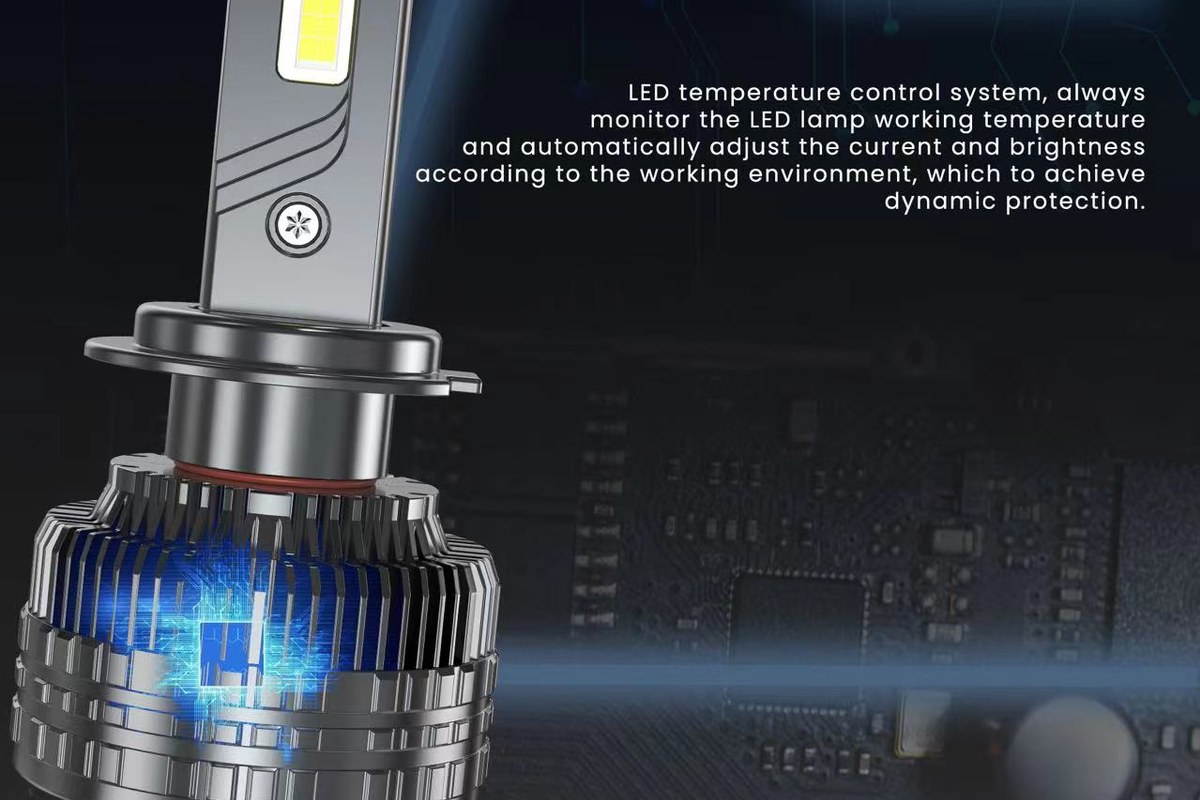
At 120W per bulb the thermal path does the work. The K13 MAX uses a machined aluminium body with an integrated fan, so heat leaves through the body rather than soaking the reflector bowl. In a sealed housing that difference shows up over a season, not in the first week.
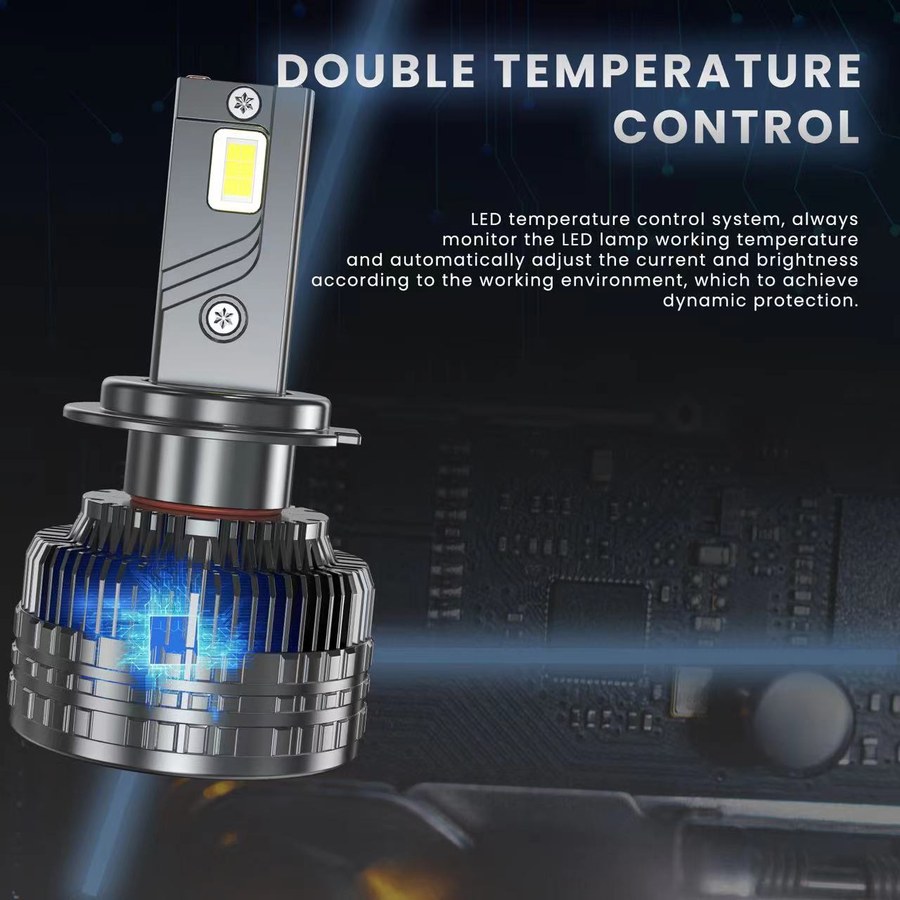
Aluminium body with integrated cooling
Beam in a reflector
A reflector housing amplifies whatever the chip throws. At this wattage, alignment is not optional: a lamp that is a few degrees off centre will glare, and the fix is seating the base correctly rather than lowering the wattage.
Specification
| Specification | Value |
|---|---|
| Power | 240W per set (120W per bulb) |
| Luminous flux | 28,800LM per set |
| Colour temperature | 6,000K |
| Voltage | DC 12V |
| CANBUS | Error-free on most vehicles |
| Sockets | H1, H4, H7, H11, 9004, 9005, 9006, 9007, 9012 |
| Packing | 12 x 6 x 8 cm, 0.6 kg per set |
CANBUS on newer vehicles
Higher wattage does not automatically satisfy a bulb-monitoring circuit. On vehicles that check resistance, a decoder is still the reliable answer, and quoting it with the first order avoids a second shipment later.
Where this platform makes sense
The 240W platform suits buyers who need one specification across a wide socket range – one warranty term, one packing size, one set of test records. Nine sockets now share that platform, including 9004 and 9012, which are common on North American pickups.
For markets where 240W is above the legal limit, the same housing is produced at lower power; the mounting and beam geometry stay the same, so a distributor can carry one range and still meet local rules.
Post time: Nov-05-2026


