


In markets with periodic vehicle inspection, the question is never “how many lumens”. It is whether the low beam has a defined edge and whether the high beam stays inside the same axis. A lamp that throws light above the cut-off line fails, no matter how bright it is.
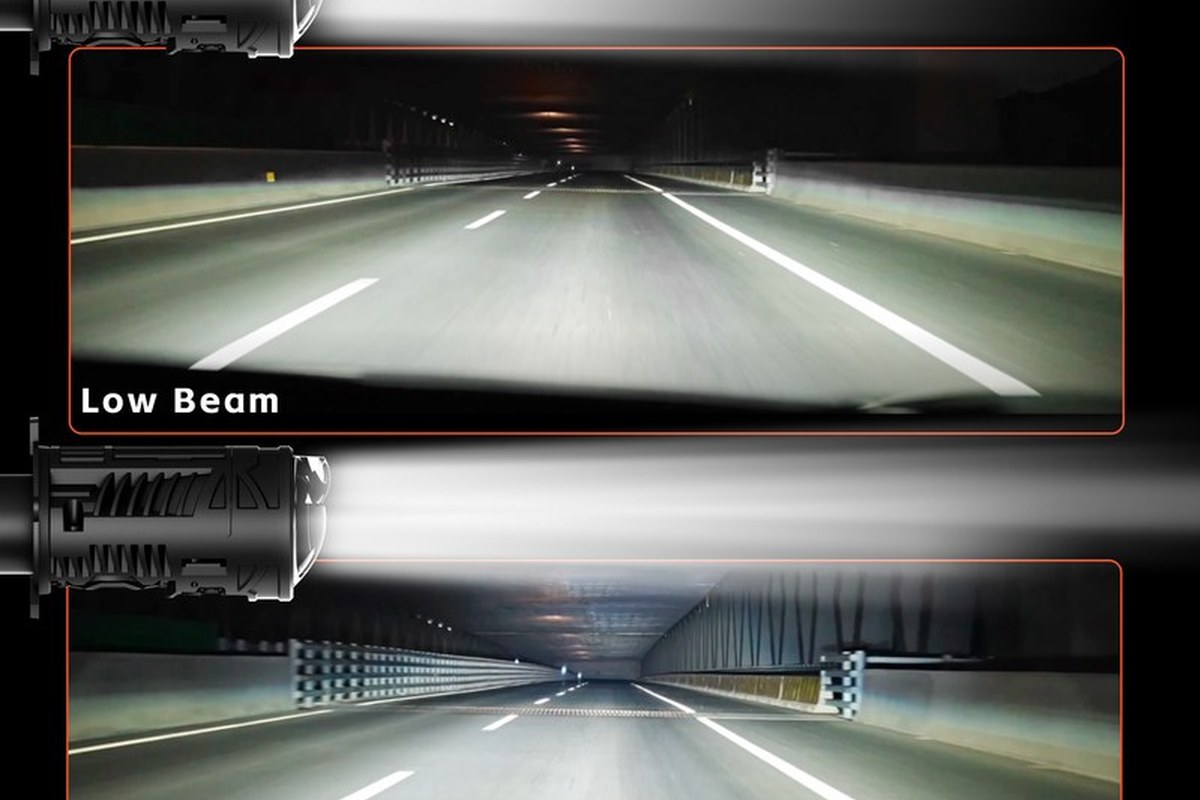
T09: a projector lens inside a standard H4 base
Why a reflector housing is the hard case
An H4 reflector was designed around a filament at a fixed height. A bare LED chip sits at a different point, so the reflector scatters part of the beam upward. On a wall this reads as a soft, wide glow – which is exactly what an inspector flags.
The T09 puts a projector lens in front of the chip, so the beam is shaped before it leaves the housing. The result is a defined low-beam edge and a high beam that stays centred rather than flaring.
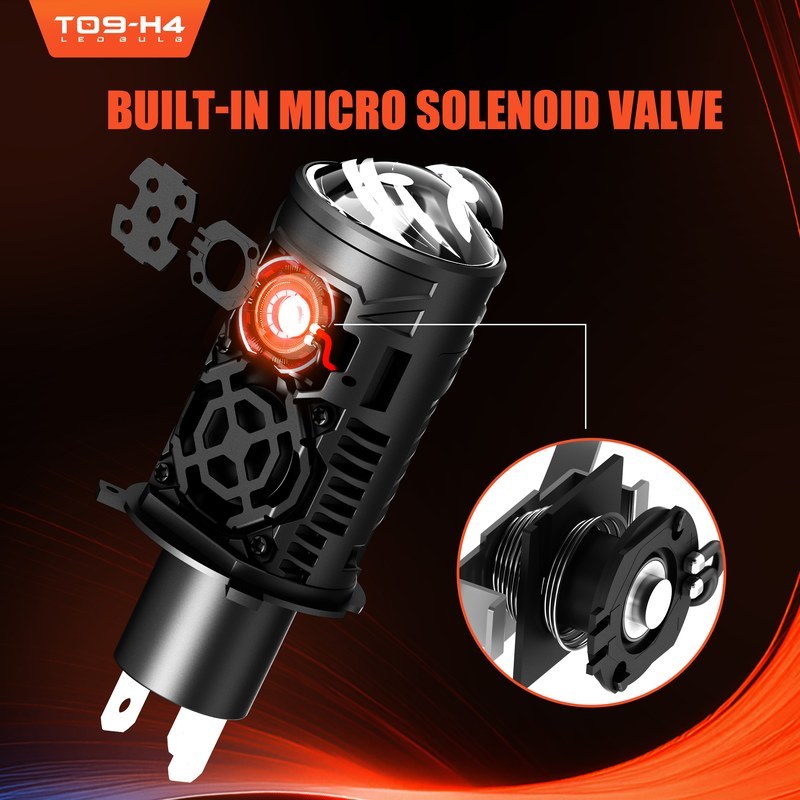
Aluminium 6063 body with an integrated fan
What to send a buyer as evidence
- A wall shot at 3 m for the low beam, camera on a tripod, one lamp only
- The same position for the high beam
- A side view showing the lamp seated flush in the housing
These three photos settle most pre-order questions. A lumen figure does not.
Specification
| Specification | Value |
|---|---|
| Model | T09 H4 |
| Power | 140W |
| Luminous flux | 14,000LM |
| Colour temperature | 6,500K |
| Socket | H4 (9003 / HB2) |
| Body | Aviation aluminium 6063 |
| Warranty | 12 months |
Practical notes for H4 housings
Two checks avoid most returns: confirm at least 35 mm of clearance behind the bulb for the fan, and add a 6 ohm decoder on vehicles with a CANBUS monitoring circuit if the dashboard reports a bulb error.
For markets where the inspection is strict, the T09 is the safer quotation than a bare-chip bulb at the same wattage – the difference shows up on the wall, not on the specification sheet.
Post time: Oct-30-2026


